Growth Equity Report
ADVERTISEMENT
3 minerals changing the global landscape that every investor should know about.
Published: October 5, 2020
From old faithful’s to new age disruptive technologies, these 3 minerals are the backbone of society and changing the way we will live in the future.
Whether you prefer investing in steady established markets or getting on the newest, explosive, disruptive game changing trends, these minerals are must haves in every investor’s portfolio.

By
JAKE
CARPENTER
Investment Editor
Understand what is driving these industries and how to profit from them.
In the modern mining industry, strategic thinking about resource plays has taken on additional dimensions: Success isn’t just about the value of the raw materials dug from the earth, but the long-term prospects of the industry that they are destined for. Get ahead of a global trend, and you can ensure the profitable extraction and economic viability of your metals and minerals.
That’s also the key to investing in mineral markets today, getting ahead of the trend…and there are 3 minerals you can’t afford to leave out of your portfolio in the coming years.
Mineral #1:
The well known, well established, best performing mineral of 2020: IRON ORE
Supply Shortages in Iron Ore… and Rising Global Demand.
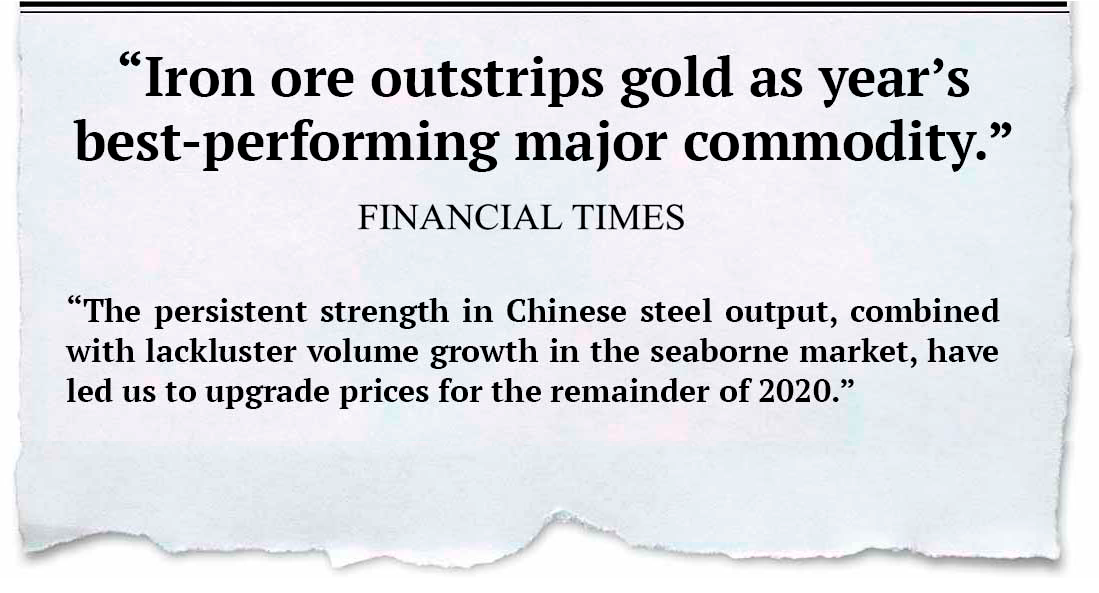
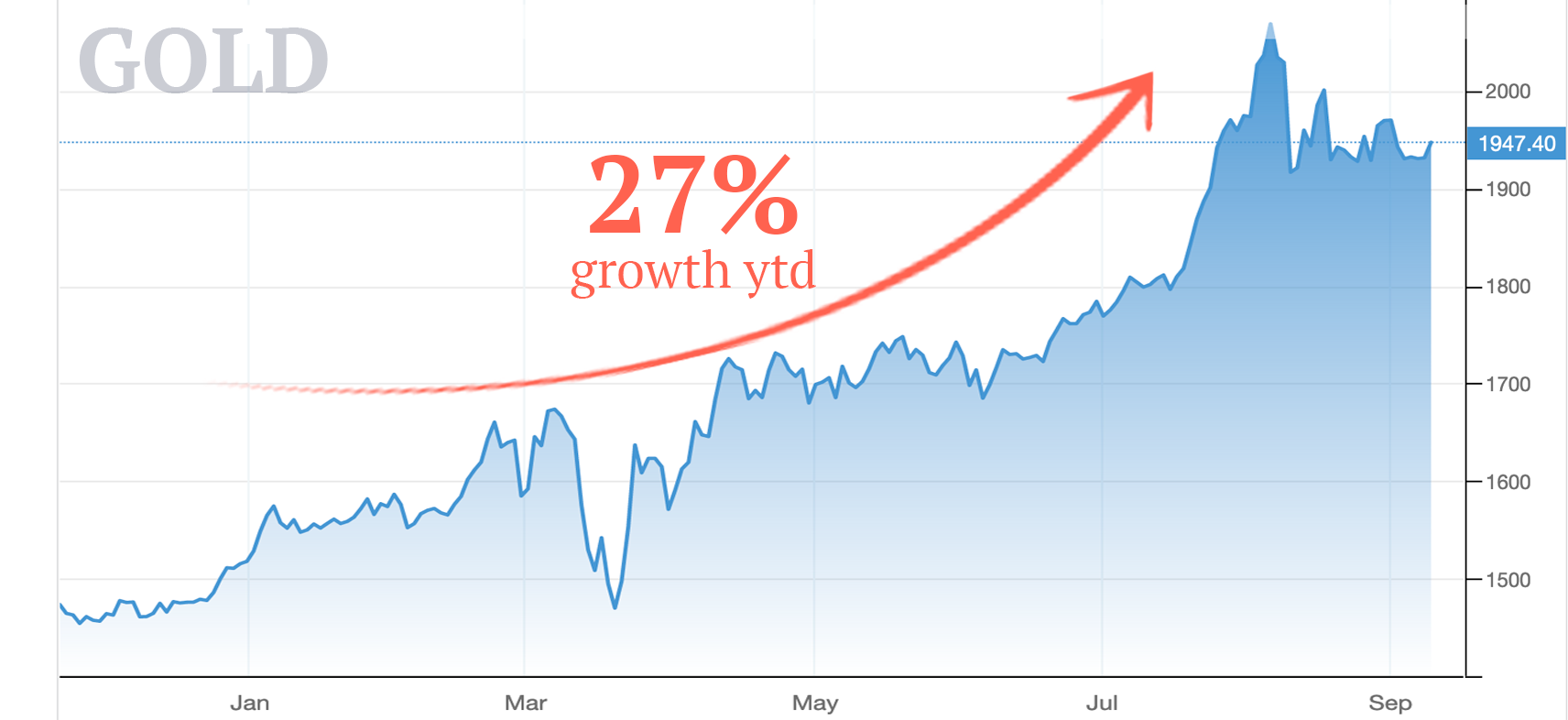
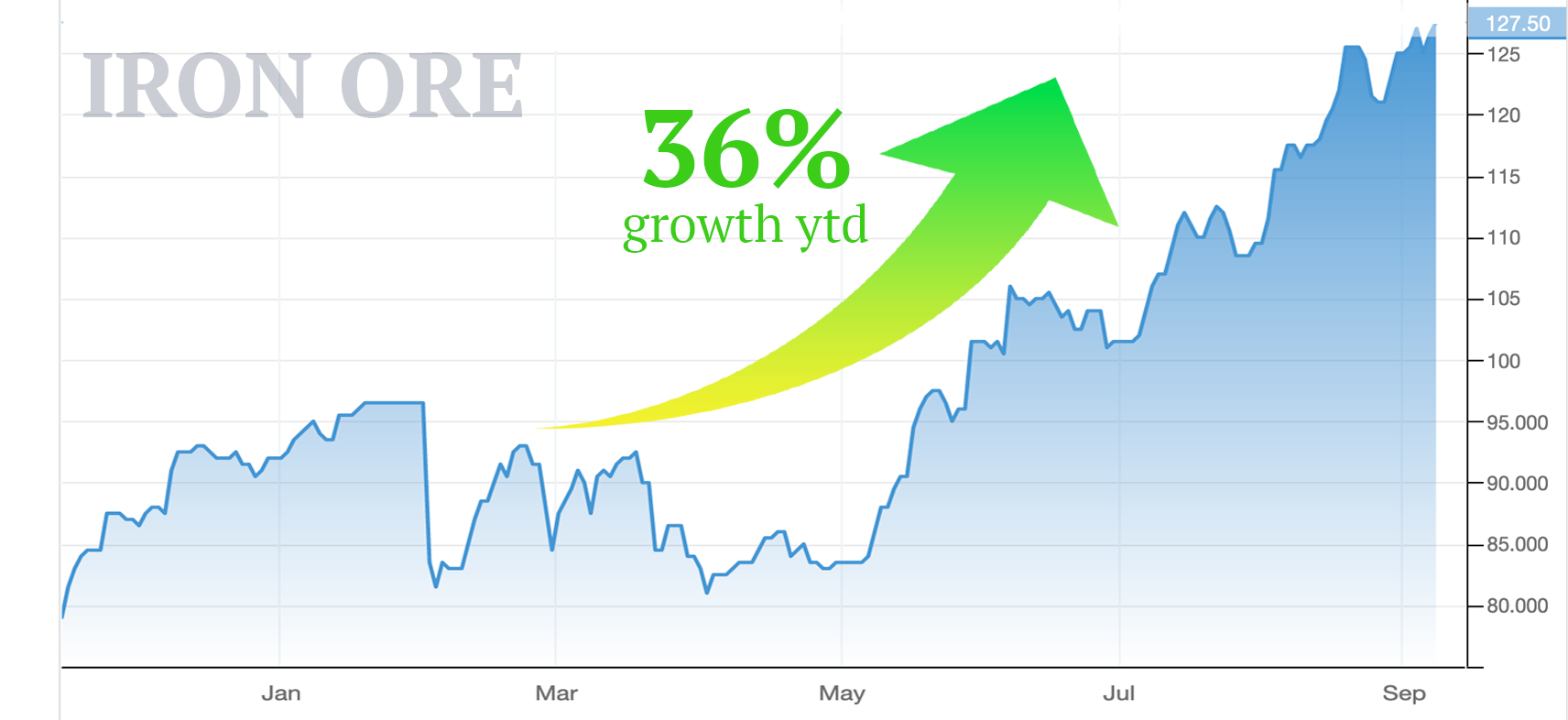
Iron Ore, has been a standout performer in recent months. Iron rose from $93.56 in January 2020 to a peak of $127.53, for a 36% gain. For perspective, compare that performance to gold’s results: a 27% gain from January 2020 at $1519.50 to the recent $1930.1
Why is Iron Ore surging? It’s a classic supply–demand setup. Production has fallen off in recent months, while a recovering global economy—particularly China, back at full steam—needs plenty of steel for infrastructure and other industrial demands.
When the global economy is firing on all cylinders, you won’t find a more stable and profitable sector.
The U.S., for example, is on the verge of a $1 trillion infrastructure proposal to reboot the economy and job sector. Iron Ore is always going to be in demand, but the next few years could be a significant boom. “Iron ore and coking coal should be most resilient due to their weighting towards China, infrastructure, and high-rise multi-year property builds, where construction should continue,” Credit Suisse recently said in their Commodity Notes publication.
Mineral #2:
Titanium, the Swiss Army Knife of Metallic Elements.
Second, the mining of Titanium—a highly corrosion-resistant metal that also has the highest strength-to-density ratio of any metallic element. Titanium’s most outstanding attribute is its diversity of uses. The majority of titanium ore is refined into titanium dioxide, which is used as a pigment in paints and coatings, paper, toothpaste, plastics, and cement. Experts project the global titanium dioxide market will expand to more than $28 billion by 2025, representing a healthy 8.7% CAGR.2
Mixed with iron, aluminum, vanadium, or molybdenum, Titanium is also used for the production of strong, lightweight alloys for aerospace, military, and automotive, among many other industrial processes. Its lightweight strength also offers significant utility in the medical world, for use in prostheses, implants, and instruments. Finally, you surely have some Titanium with arm’s reach, as it’s a popular component in sporting goods, jewelry, and electronics, and personal care products, among many other uses.
Like Iron Ore, Titanium stands to benefit from a recovering world economy, as demand rises for the many industrial and consumer

Titanium is used for the production of strong, lightweight alloys for aerospace.
Mineral #3:
Vanadium Provides Mining Solutions to Technology Problems.
This relatively unknown mineral proposes the biggest new growth opportunity to investors as the new kid on the block. This under the radar mineral has been quietly disrupting the USD 113.4 billion battery industry and the USD 3.4 billion energy storage industries.
Vanadium, has been causing a major buzz in the markets recently. An element discovered first in the early 19th century, Vanadium finally gained large-scale industrial utility at start of the 1900s, when it was used to reduce the weight and increase the strength of steel in Model T Fords. In subsequent decades, it has been incorporated into many uses of metal alloys, from surgical tools and dental implants to jet engines and airframes.
Now, why this mineral needs to be on your radar.
As it turns out, Vanadium isn’t merely exceptional at strengthening metal: Its unique properties make it perfectly suited for use in two forms of rechargeable batteries—both of which could lead their respective electric battery sectors in the near futures.
The first has been around for a few years, in the form of so-called Vanadium redox batteries that are used commercially for grid energy storage. As a way to store energy for renewable electricity generation from wind or solar, they offer benefits in efficiency and cost vs. lithium-based batteries.
Even more exciting, however, is Vanadium’s potential for revolutionizing the electric vehicle battery industry, which is anticipated to be worth $84 billion by 2025. In layman’s terms, Vanadium is able to improve the performance of lithium batteries, achieving faster recharging, better storage, and more power. This isn’t just a pie-in-the-sky dream either—an Audi A2 powered by a lithium-Vanadium battery recently set a long distance record, and companies such as Subaru, BYD Auto (a Chinese electric car manufacturer backed by Warren Buffett), and Valence Technologies have fast-tracked research and development work to scale the technology to a wider audience.
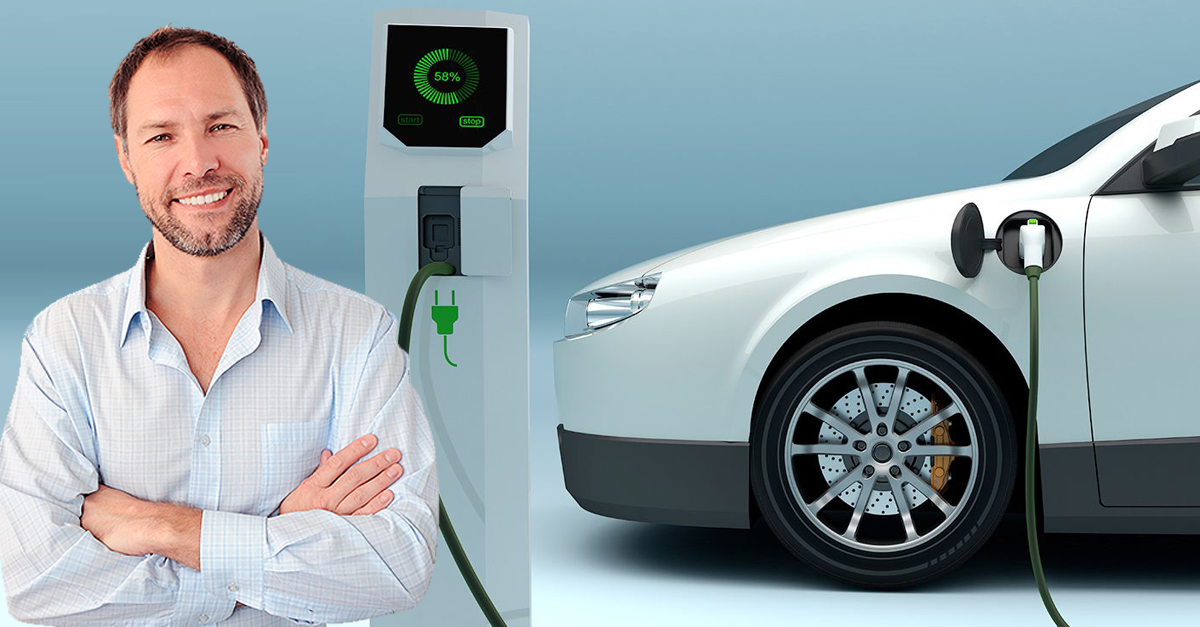
Vanadium has potential for revolutionizing the electric vehicle battery industry.
What Could Be Next for Vanadium Batteries…and Miners?
Rocket fuel for the industry could come in the form of a new technological advance in applying Vanadium…or it could be the announcement of a new auto manufacturer choosing a Vanadium solution for its battery-powered vehicles…
On the Iron Ore side, it might be the announcement of new stimulus packages in the U.S., Asia-Pacific, or E.U., with governments pouring money into infrastructure projects.
Similarly, Titanium could surge in demand due to a recovering global economy and need for industrial materials…or a breakthrough in 3-D metal printing.
It could even be a rumor that a mining major has a junior explorer in its sights.
Conclusion
Now is the time to start doing your due diligence on potential mining investments—and particularly those taking an inside line on Iron ore, titanium and vanadium. While money will be made by the battery manufacturers, it’s the Vanadium miners and suppliers who can sell to all of them that could be opening themselves to the most massive opportunity of all. The same principle applies to opportunities within the high-demand Iron Ore and Titanium sectors as global industrial demand soars.

Share this article